

5 Reasons Why Fuel Prices Are Rising in Uganda’s Border Areas
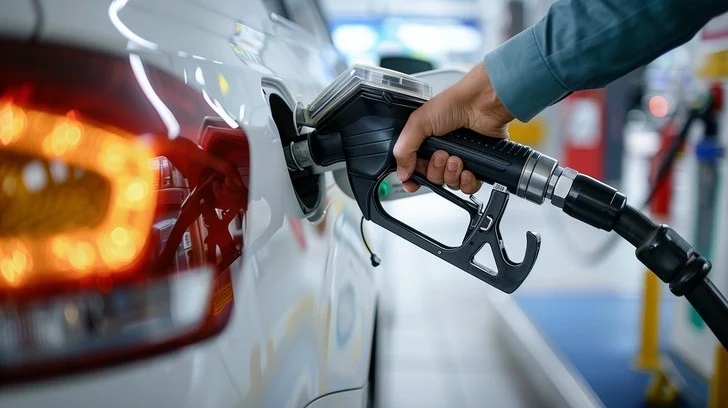
Fuel prices are rising sharply in Uganda’s border districts such as Tororo, Busia and Arua, leaving motorists facing long queues and empty pumps, even as government insists national fuel stocks remain stable.
Officials say the spike is being driven by a combination of cross-border demand, supply delays, fuel diversion within the region and what some describe as opportunistic behaviour in the distribution chain.
Here are the key reasons behind the increase:
One of the biggest drivers is increased demand from neighbouring countries.
Motorists and traders from Kenya, the Democratic Republic of Congo and South Sudan are crossing into Uganda to buy fuel, attracted by relatively lower and more stable prices.
“Fuel prices in Kenya are higher than in Uganda, so those at the border have taken advantage by crossing to the Ugandan side to buy fuel,” said Julius Odiye, Speaker of Malaba Town Council.
In eastern DRC, fuel prices are often significantly higher due to transport costs and insecurity, while in South Sudan prices can rise even further, often exceeding Shs7,000–Shs9,000 per litre, due to heavy reliance on imports and weak supply chains.
2. Price Differences
Kenya’s regulated fuel prices range between roughly Shs4,900 and Shs6,000 per litre for petrol and Shs4,500 to Shs5,600 for diesel, with prices rising further in remote areas.In contrast, Uganda’s prices are more stable, averaging about Shs4,900 to Shs5,400 for petrol and Shs4,500 to Shs5,000 for diesel.
This gap, though modest in some cases, creates strong incentives for cross-border arbitrage.
Even a difference of a few hundred shillings per litre becomes highly profitable at scale, drawing large volumes of buyers into Uganda’s border towns.
3. Delays at Mombasa Port
Supply has also been affected by delays at Kenya’s Port of Mombasa, limiting how much fuel Uganda can bring in at a time when demand is rising.
Kenyan authorities limited the discharge of Uganda’s fuel cargo at the port to agreed handling quotas, allowing only about 58,000 metric tonnes to be offloaded despite the vessel carrying roughly 115,000 metric tonnes.
Officials say the restriction is in line with port scheduling and allocation frameworks, but it has slowed deliveries to inland depots and made it harder for Uganda to meet the surge in demand triggered by traders and motorists from neighbouring countries.
As a result, even with adequate national stocks, supply pressure is being felt more sharply in border regions.
4. Fuel Swapping
Authorities and industry sources have also pointed to fuel swapping within regional supply networks as a contributing factor.
In earlier investigations, sources said some oil marketing companies have diverted or swapped fuel allocated for Uganda into Kenya, where margins can be higher.
“Yes, it was a very sad incident,” a government source said previously.
“Imagine we are struggling to maintain adequate supply of fuel for the Ugandan market while companies are looking for ways of making more money in the region,” the source added.
Such practices, combined with cases where fuel meant for retail is redirected through commercial channels, reduce volumes reaching local pumps.
5. Hoarding and Opportunistic Pricing
Officials say some smaller dealers and retailers are also holding back fuel in anticipation of higher prices.
“Some petrol station owners are doing this deliberately to benefit from the crisis, but this is not fair,” said Albert Amula, Deputy RDC of Tororo.
The Uganda National Oil Company (UNOC) says its supply prices have not increased, raising concerns about unjustified retail price hikes.
National Supply
Despite the localized shortages, Ugandan officials say the overall fuel position remains stable.
As of April, Uganda held about 70.5 million litres of petrol (19 days of cover), 43.2 million litres of diesel (12 days) and 32 million litres of jet fuel (53 days).
Uganda consumes about 2.3 million litres of petroleum products daily and relies entirely on imports routed through Kenya and Tanzania.
Officials say the current situation is less about national shortages and more about how fuel is distributed and accessed at the local level.
Energy Minister Ruth Nankabirwa recently said the supply system, coordinated by UNOC and supported by global trader Vitol, has helped maintain stability by sourcing fuel from multiple global markets.
By ChimpReports